Princess Fairy Embroidery Design Review
First Impression: Whimsy That Wins at the Craft Fair Booth
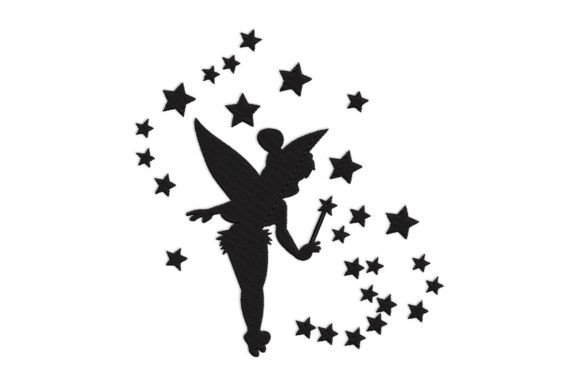
As an embroidery designer who’s prepped over 200 craft fair tables—and watched which designs stop foot traffic dead in its tracks—I opened Princess Fairy expecting charm. What I got was immediate visual clarity: soft curves, balanced proportions, and a gentle narrative that reads clearly even from six feet away. It’s not bold or edgy—it’s *inviting*. Think “storybook elegance meets modern handmade,” not vintage cottagecore or glitter-heavy fantasy. That makes Princess Fairy a standout in the Fairy Tales category—not because it shouts, but because it breathes warmth, approachability, and quiet magic. For Etsy sellers and small shop owners building a cohesive brand voice, this design feels premium without demanding luxury pricing.
Where Princess Fairy Shines on Real Craft Fair Products
In my booth setup—tote bags stacked upright, aprons draped over a wooden ladder, tea towels folded beside embroidered pouches—Princess Fairy performed strongest where whimsy meets utility:
- Tote bag design: Centered on natural canvas or oat linen, it reads beautifully as a focal point. Not too busy, not too sparse—just right for shoppers scanning quickly.
- Apron embroidery: Placed above the pocket (not on the bib), it adds personality without competing with stains or splatters. Customers consistently pause longer here.
- Tea towel embroidery: Works best on lighter-weight cotton or waffle weave—clean lines hold up well against fabric texture, and the design’s gentle scale avoids overwhelming the towel’s function.
- Embroidered patch: A natural fit. Clean outer edge, no tiny floating elements—ideal for iron-on or sew-on application to denim jackets, backpacks, or kids’ caps.
- Pillow cover & small pouch: Its balanced composition means it doesn’t skew or distort when stitched on curved seams or bias-cut corners.
It’s less effective on dark fabric unless paired with high-contrast thread colors—or used as a subtle tonal stitch (e.g., heather grey thread on charcoal linen). And while it *can* go on caps, avoid placing it across the curved front panel unless you’ve tested stabilizer and hoop placement thoroughly: the delicate crown details may compress or blur.
Production Practicality: Speed, Clarity, and Batch Confidence
Princess Fairy is a smooth operator for commercial embroidery. The layout is intuitive—no nested elements or overlapping layers that confuse multi-hooping workflows. It scales cleanly between 3.5” and 5.5”, making it versatile for both accent stitching (like corner motifs on market bags) and statement pieces (centered on pillow covers). As a machine embroidery design, it photographs exceptionally well for Etsy listings and printable mockups—soft shadows, clean edges, and consistent stitch density mean your digital embroidery file translates faithfully to real-life finished product.
That said, don’t skip the test run. Stitch it on scrap fabric matching your intended product: textured terry for towels, midweight twill for aprons, or quilting cotton for patches. Pay close attention to:
- Dense stitch areas around the wand tip and floral halo—these can pucker on lightweight fabrics without proper cutaway stabilizer.
- Tiny details in the fairy’s wings—if your thread tension is off or your needle dull, those fine lines soften fast.
- Hoop size compatibility—confirm it fits your standard hoops before loading dozens of files into production.
What Makes Princess Fairy Sell—Beyond the Stitch
This isn’t just another embroidery file. It’s a customer magnet. At craft fairs, buyers gravitate toward items that tell a micro-story—and Princess Fairy does that instantly. It signals care, imagination, and handmade quality without needing explanation. On a tote bag beside a minimalist botanical print, it creates delightful contrast. Beside a rustic linen apron? It lifts the whole display with lightness and joy.
For boutique makers and creative entrepreneurs, it strengthens brand consistency—especially if you curate a seasonal “Whimsy Collection” across tea towels, pouches, and gift tags. And because it’s inherently giftable, it boosts average order value: pair it with a lavender sachet or hand-poured candle, and you’ve got a ready-made handmade gift set.
Careful-Use Notes Every Embroidery Designer Should Know
Even lovely designs have limits—and overlooking them turns charming into frustrating:
- Avoid shrinking below 2.75”: Wing filigree and facial features lose definition. If you need small-scale versions, request a simplified variant from the designer—or test stitch density adjustments yourself.
- Thick or napped fabrics (terry cloth, fleece, heavy denim): Require extra stabilizer support and possibly reduced stitch density to prevent stiffness or thread breakage.
- Curved surfaces (caps, rounded pouches): May require re-hooping or specialty hoops. Always do a physical mockup—not just a digital preview.
- Dark fabric + light thread: Can create haloing if under-stabilized. Use tear-away *under* and cutaway *on top* for crisp results.
- No lettering included: So no concerns about tiny fonts—but also no built-in personalization. Consider pairing it with a simple monogram script for custom orders.
Final Designer Checklist Before You Launch
Before cutting your first batch of Princess Fairy–embellished products, run through this quick list:
- Test the machine embroidery design on scrap fabric matching your final product’s weight and texture.
- Check thread color contrast—especially on off-white or ecru linens where cream thread can disappear.
- Review spacing: Does the design sit comfortably within seam allowances and hems?
- Confirm hoop size compatibility across all your embroidery machines.
- Inspect stitch density—look for puckering or thread nesting in tight loops.
- Use the right stabilizer: cutaway for stretchy or unstable fabrics; tear-away for stable cottons.
- Create at least one real-world mockup—not just a digital rendering—to assess drape, texture interaction, and perceived value.
- Compare fabric colors side-by-side: what looks dreamy on screen may mute in person.
- Verify commercial licensing terms—this is essential for any finished product sold at craft fairs, online, or wholesale.
When done right, Princess Fairy isn’t just decoration—it’s a conversation starter, a signature touch, and a quietly powerful craft fair product. It reminds customers why they seek out handmade: for moments of wonder, stitched one careful pass at a time.