Barbell Dumbell Embroidery Design Review
A Whimsical Yet Grounded First Impression
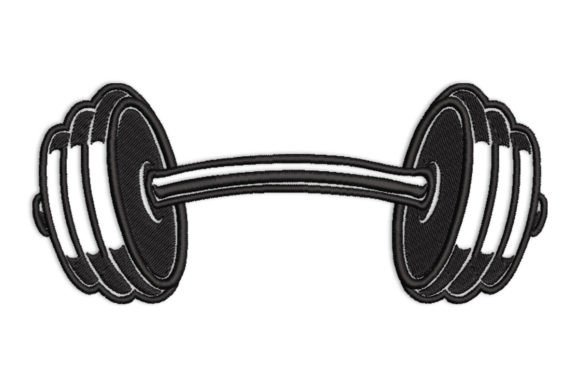
At first glance, Barbell Dumbell reads as a lighthearted, approachable machine embroidery design—less gym-bro intensity, more playful nod to strength and movement. The title alone hints at Sports category roots, but the description (“a touch of whimsy and charm”) signals it’s not literal fitness gear—it’s stylized, friendly, and intentionally uncluttered. For small business owners, that’s gold: it avoids intimidating sterility while still feeling intentional and design-savvy. Think boutique fitness studio, artisanal coffee roaster with “lift your mood” branding, or a pet wellness brand using strength metaphors for resilience. It’s not bold or aggressive; it’s warm, handmade in spirit, and quietly confident.
Where Barbell Dumbell Shines in Small Business Merch
This design excels where personality meets practicality. As an embroidered patch, it holds up beautifully on denim jackets, canvas tote bags, and aprons—especially for bakeries, florists, or craft studios wanting subtle thematic flair without overt labeling. On staff uniforms, Barbell Dumbell works well as a chest accent or sleeve detail: compact enough to avoid visual overload, distinctive enough to reinforce brand identity across teams. For cap embroidery, it scales cleanly to 2.5"–3" front placement when digitized thoughtfully—ideal for local gyms, yoga collectives, or even a café with “strong brew, stronger community” messaging.
As a tote bag design or apron embroidery motif, its balanced proportions prevent distortion during stitching, and its open shapes allow breathability in stitch density—critical for cotton twill or medium-weight canvas. Etsy sellers and handmade brands benefit most here: Barbell Dumbell adds tactile authenticity to product packaging accents (think stitched tags on soap bundles or seed packets) and elevates customer gifts like branded tea towels or linen pouches. It also translates smoothly into printable mockups—making client approvals faster and more confident.
Smart Placement & Where to Proceed With Care
While versatile, Barbell Dumbell isn’t universally forgiving. Avoid pushing it below 1.75" in width for patches—its barbell shape relies on clear horizontal definition, and tiny scaling risks merging elements or losing legibility. Cap fronts with steep curvature demand careful digitizing adjustments; test on a real cap blank before bulk production. Likewise, dark uniforms require high-contrast thread colors—navy with light heather gray or ivory thread maintains charm without sacrificing visibility.
Be mindful on textured fabric: heavy slub cotton or bouclé can obscure fine outlines, so confirm the embroidery file includes clean, slightly widened contours—not just thin decorative lines. Frequent washing? Reinforce stabilizer choice (cutaway + tear-away combo recommended) and verify stitch density isn’t over-packed, which can stiffen fabric or encourage fraying over time. If used on product labels or small sewn-in tags, ensure no delicate interior loops or micro-details are present—those rarely survive industrial laundering or repeated handling.
How Barbell Dumbell Builds Brand Identity
In merch strategy, consistency is currency—and Barbell Dumbell delivers quiet cohesion. Its whimsical tone supports brands that value approachability over authority: a pet wellness shop using “strength in gentleness,” a ceramic studio celebrating functional artistry, or a neighborhood co-op highlighting collective effort. Unlike generic icons, it invites interpretation while remaining instantly recognizable—strengthening customer recall without needing text.
It also subtly elevates perceived value. A hand-stitched or embroidered detail signals care; Barbell Dumbell’s charm reinforces that handmade product ethos. Customers engage more deeply with items that feel curated, not mass-produced—and this design bridges professionalism and personality without leaning too corporate or too craft-fussy. When paired with other design assets (like a simple wordmark or icon set), it anchors visual consistency across apparel, packaging, and digital mockups—building trust through repetition and refinement.
Practical Designer Notes for Commercial Use
Before committing to production, run these checks:
- Test in black and white first—verify contrast and clarity without color distraction.
- Check small-patch viability: resize to 1.75" and inspect spacing between barbell ends and dumbbell weights—no crowding or thread nesting.
- Review thread color pairings for your target fabrics: light thread on dark backgrounds needs extra underlay; dark thread on light may need reduced density to avoid stiffness.
- Confirm hoop size compatibility—does the design fit comfortably within your standard 4x4 or 5x7 hoop? Oversized hoops increase setup time and cost.
- Test on real fabric, not just stabilizer—observe how tension interacts with your base material (e.g., terry cloth towels vs. structured twill).
- Use appropriate stabilizer: cutaway for stretchy or unstable fabrics; tear-away for stable wovens; fusible for lightweight linens.
- Create a physical mockup for client approval—digital previews miss texture, drape, and scale realism.
- Compare beside existing design assets: does Barbell Dumbell harmonize with your logo weight, line thickness, and overall rhythm?
- Confirm commercial licensing before use on resale items—this is non-negotiable for Etsy sellers, apparel decorators, and small batch manufacturers.
Remember: a great digital embroidery file is only as strong as its execution. Barbell Dumbell offers flexibility and warmth—but success hinges on thoughtful digitizing, fabric-aware testing, and alignment with your brand’s voice. Used intentionally, it becomes more than decoration. It becomes part of your story.