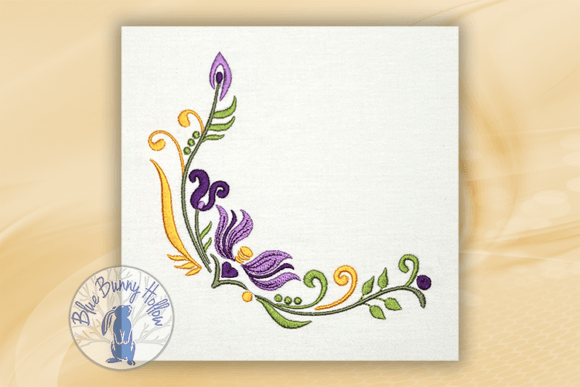
Floral Corners 3: A Thoughtful Embroidery Design for Meaningful Gifts
First Impressions: Sweet, Elegant, and Quietly Timeless
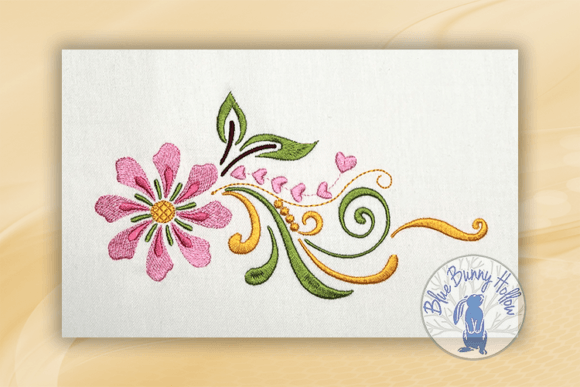
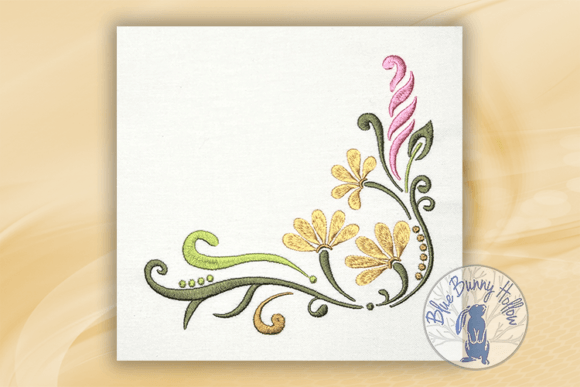
Unzipping the Floral Corners 3 file feels like opening a small garden journal—delicate, intentional, and full of quiet charm. As an embroidery designer who’s tested hundreds of single-flower motifs, I was immediately drawn to its balance: not overly fussy, not too minimal. It leans romantic and handmade without slipping into vintage cliché. The petals have gentle curvature, the stems flow with subtle rhythm, and the overall scale suggests care—not speed. It reads as classic, yet fresh enough for modern nurseries, wedding keepsakes, or artisanal kitchen goods. There’s no loudness here, only warmth. That makes Floral Corners 3 especially powerful for personalized gifts where emotional resonance matters more than flash.
Where This Design Truly Shines
Floral Corners 3 isn’t just decorative—it’s relational. Its quiet elegance invites connection, which is why it works so well across high-intent gifting categories:
- Baby embroidery: Perfect for corner placement on organic cotton blankets, muslin swaddles, or crib bumper alternatives—soft, gender-neutral, and heirloom-ready.
- Wedding gift: Stitched onto linen pillow covers, monogrammed napkins, or quilt blocks for a “stitched memory” guest book alternative.
- Nursery decor: Repeating Floral Corners 3 along the border of a wall hanging or framed quilt block adds cohesion without overwhelming tiny spaces.
- Personalized towel & apron: On high-quality flour-sack towels or chef-style aprons, it signals craftsmanship—not mass production.
- Etsy seller & craft fair product: Paired with a handwritten tag (“Stitched with care in [Your Town]”), it elevates perceived value instantly. Customers don’t just buy a towel—they buy intention.
Smart Placement Matters More Than You Think
This design thrives when placed intentionally—not everywhere. Because Floral Corners 3 lives in the Single Flowers category and functions best as a corner accent or repeating motif, avoid forcing it into roles it wasn’t designed for:
- Avoid small lettering or fine text integration: It’s a floral motif—not a font. Don’t try to nest names or dates inside the bloom unless you’ve confirmed the stitch density supports legibility at that scale.
- Test carefully on textured fabric: Heavy terry cloth or bouclé can swallow delicate stem lines. Use cutaway stabilizer and reduce top tension slightly.
- Think twice before using on stretchy baby clothes: While lovely on blankets, knits require motion-stabilized hooping and often benefit from simpler, bolder motifs.
- Curved surfaces (like mugs or curved tote sides) demand mockups: Distortion is real—print a printable mockup first or use software preview tools to check alignment.
- Dark fabric? Confirm thread color contrast: Light ecru or soft sage may disappear on charcoal linen. Always test two thread options—one light, one mid-tone—on your base fabric.
Why Customers Trust—and Return To—This Kind of Handmade Product
When customers see Floral Corners 3 stitched cleanly on a finished product, they register three things instantly: care, consistency, and calm. That translates directly to trust. In a crowded digital marketplace, a well-executed machine embroidery design like this tells buyers, “This wasn’t rushed. This was chosen.” It supports storytelling—whether it’s a new parent’s first nursery piece or a couple’s first shared kitchen towel. And because it’s repeatable (as the description notes: “Magnificent if you repeat the design for a frame, quilt block”), it helps small shop owners build cohesive collections—something Etsy shoppers actively search for using terms like “coordinated nursery set” or “matching wedding linens.”
Practical Embroidery Notes You’ll Want Before Your First Run
Before stitching your first customer order—or listing Floral Corners 3 as part of your digital embroidery file shop—take these five steps:
- Test on scrap fabric: Match both fiber content and weight. A 100% cotton tea towel behaves very differently from a poly-cotton blend.
- Confirm hoop size compatibility: Does it fit comfortably in your most-used hoop? If not, consider resizing—but always retest stitch density and detail retention.
- Review stitch density: Too dense = puckering on lightweight fabrics; too sparse = loss of definition. Look closely at petal edges and stem taper in your embroidery software preview.
- Choose stabilizer wisely: Tear-away for stable wovens (linen, quilting cotton); cutaway for knits or high-wash items like baby blankets; water-soluble for delicate lace overlays.
- Check commercial licensing: Since you’re selling finished products—not just the file—verify that Blue Bunny Hollow permits commercial embroidery use. When in doubt, email them. Clarity now prevents returns later.
Final Thought: A Design That Grows With Your Business
Floral Corners 3 is more than a pretty embroidery file. It’s a versatile anchor for thoughtful product development—whether you're launching your first Etsy shop, expanding your baby product line, or designing custom wedding bundles for local boutiques. Its strength lies in restraint: it doesn’t shout, but it lingers. Customers remember how something made them feel—not just what it looked like. And when paired with strong photography (natural light, clean backgrounds, fabric texture visible), Floral Corners 3 becomes a silent sales partner—inviting slower scrolling, longer engagement, and warmer unboxings. For anyone building a brand around handmade quality and heartfelt gifting, this is the kind of personalized gift motif that earns repeat customers, word-of-mouth referrals, and yes—even a few framed thank-you notes on your studio wall.