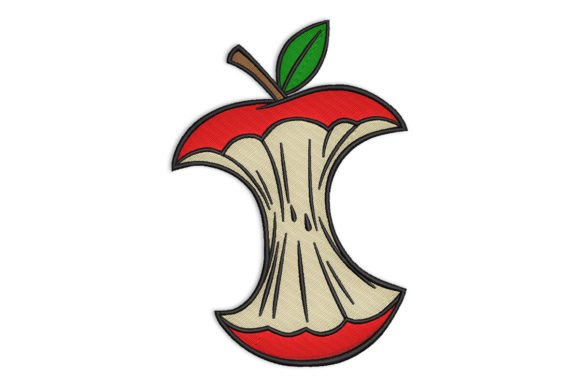
Apple Core Embroidery Design Review
First Impression: Whimsy with Wearable Warmth
As an embroidery designer who’s digitized and stitched thousands of logos for small businesses—from neighborhood bakeries to indie florists—I opened Apple Core expecting charm. What I found was more: a design that balances playful food-inspired energy with quiet sophistication. The title alone signals approachability and natural authenticity—ideal for brands leaning into handmade, farm-to-table, or artisanal values. “Embellish your fabrics with this lovely embroidery design” tells me it’s meant to elevate—not overpower—and “a touch of whimsy and charm” confirms its role as a subtle brand accent, not a bold statement logo. For Food and Embroidery categories, Apple Core lands firmly in the sweet spot between rustic and refined.
Real-World Business Use: Where Apple Core Shines
Apple Core excels where small business merch needs personality without pretension. Think café aprons embroidered just above the pocket—clean, legible, and warm. Picture it as a 2.5-inch embroidered patch on a linen tote bag for a local orchard stand: instantly recognizable, tactile, and cohesive with seasonal packaging. It works beautifully as a chest logo on staff uniforms (especially light-colored cotton or twill), a sleeve detail on barista shirts, or a cap embroidery front accent for a boutique bakery—small enough to fit standard cap fronts yet distinctive enough to spark conversation.
For Etsy sellers and handmade brands, Apple Core functions as versatile design assets: pair it with minimalist typography for printable mockups, layer it into product labels for jars of preserves or honey, or stitch it onto gift tags and reusable produce bags. As a custom apparel element, it adds visual consistency across product lines—say, on oven mitts, tea towels, and ceramic mugs with embroidered hangtags. In commercial embroidery settings, its balanced proportions and likely moderate stitch density mean fewer thread breaks and smoother runs across multiple garments or patches.
Careful Applications: Know Its Limits
While Apple Core brings warmth, it’s not universally scalable. On curved surfaces like baseball caps or tight-fitting sleeves, test the design at actual size first—fine details (like subtle core texture or stem definition) may blur if shrunk below 1.75 inches. Avoid using it for tiny product labels or micro-patches under 1.5 inches unless you’ve verified clarity in your embroidery file. High stitch density isn’t mentioned in the description, but if the design includes dense fill areas or intricate outlines, it may struggle on textured fabric like burlap or heavy terry cloth without proper stabilizer support.
Dark uniforms demand attention: confirm thread color contrast before production—what reads as charming on ivory linen may vanish on charcoal workwear. And because it leans into “whimsy,” avoid pairing Apple Core with ultra-minimalist or corporate branding; it thrives alongside hand-drawn fonts, natural fibers, and earthy palettes—not sleek metallics or high-gloss finishes. Frequent washing? Test durability on real fabric—towels and aprons take daily wear, so verify stitch integrity after laundering simulations.
Brand Identity Impact: More Than Just an Apple
For small businesses, every embroidered element shapes customer trust and perceived value. Apple Core doesn’t scream “premium luxury”—it whispers “thoughtfully made.” That’s powerful for handmade product brands, pet wellness studios using organic treats, or creative studios selling botanical-themed goods. Its friendly tone builds approachability, while its clean structure supports professionalism. When repeated across merchandise—caps, totes, aprons—it reinforces visual consistency without feeling repetitive. Customers don’t just see an apple; they sense care, craft, and intention. That translates directly to buyer engagement: a well-placed Apple Core on a tote bag becomes a walking brand ambassador, inviting smiles and questions—not just passive recognition.
Practical Designer Notes for Production
Before stitching Apple Core into your next batch of small business merch, follow these field-tested steps:
- Test in black and white first—verify shape clarity and spacing without color distraction.
- Check patch viability at 2”, 2.5”, and 3” sizes—confirm no detail loss in your embroidery file.
- Review thread color contrast against your target fabric—especially for dark uniforms or textured linens.
- Inspect spacing and underlay—tight curves or narrow stems need solid foundation stitches to prevent puckering.
- Confirm hoop size compatibility—if your shop uses smaller hoops for caps or sleeves, ensure the design fits without re-hooping.
- Test on real fabric with your preferred stabilizer—different weights and weaves affect stitch definition dramatically.
- Create a printable mockup for client approval—show Apple Core on an apron, tote, and cap side-by-side to demonstrate versatility.
- Compare beside other design assets—does it harmonize with your current logo, typography, and brand palette?
- Verify commercial licensing—since this is a digital embroidery file intended for small business merch and branded patch use, confirm it permits commercial embroidery and resale of finished products.
Remember: “Embellish your fabrics with this lovely embroidery design” isn’t just marketing copy—it’s an invitation to thoughtfully integrate Apple Core into your brand’s physical presence. Whether you’re digitizing for a client or stitching in-house, treat it as a strategic design asset—not just decorative flair.
Final Thought: A Small Core, Big Brand Potential
Apple Core won’t replace a full logo system—but for small business owners and embroidery shops building authentic, tactile brand experiences, it’s exactly the kind of thoughtful, scalable, and emotionally resonant machine embroidery design that turns everyday items into memorable touchpoints. Use it wisely, test thoroughly, and let its quiet charm do the work.