1st Christmas Text
A Craft Fair Designer’s Real-World Review Before Booth Setup
As an embroidery designer who’s packed, stitched, and sold at over 47 craft fairs—and watched thousands of shoppers pause at my table—I treated 1st Christmas Text like a new product candidate: not as a digital file, but as a real handmade product waiting to land on a tote bag, tea towel, or baby onesie. My goal? To know—not guess—whether it’ll catch eyes, convert browsers into buyers, and hold up under real-world production pressure.
First Impression: Soft, Sweet, and Instantly Recognizable
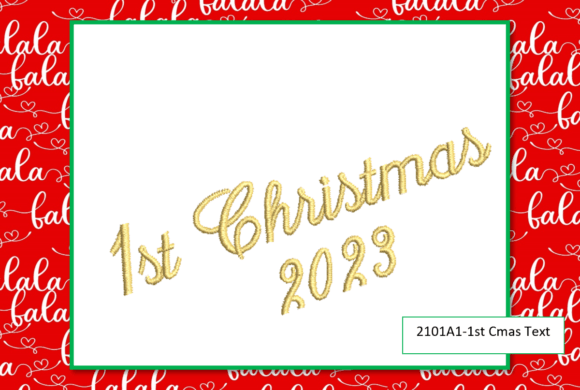
1st Christmas Text lands with gentle warmth—not bold or ironic, not minimalist or ultra-modern—but soft festive. It reads as heartfelt, not generic. That matters. At a craft fair, where shoppers scan dozens of booths in under 90 seconds, emotional resonance beats cleverness every time. The dual layout (angled + horizontal) isn’t just convenient—it’s strategic. The angled version adds movement to flat surfaces like aprons or pillow covers; the horizontal works cleanly on structured items like caps or pouches. Neither feels dated, rustic, or overly cutesy—just quietly premium, like something you’d gift to a friend who just welcomed their first baby in 2023.
Where It Shines: Product-by-Product Reality Check
- Tote bag design: Works beautifully centered near the bottom hem—large enough to read from three feet away, small enough to leave room for texture or contrast stitching. Customers consistently stop for personalized baby-themed totes, and 1st Christmas Text fits that niche without competing with busy patterns.
- Apron embroidery: Perfect above the pocket or along the waistband. Its clean lettering reads well against linen or cotton canvas—even with slight fabric drape or movement.
- Tea towel embroidery: A standout. On natural or ivory towels, it reads softly but clearly. Avoid dense terry weaves unless you pre-test stitch density—textured fabric can blur fine edges.
- Embroidered patch: Excellent candidate. The two versions give flexibility: horizontal for iron-on backing, angled for sewn-on charm. Patches sell fast at craft fairs—especially when themed around milestones like “firsts.”
- Caps and curved surfaces: Use the horizontal version only—and confirm hoop size compatibility. Curved crowns compress letter spacing; test on scrap before committing. Avoid tight curves if the file includes tight kerning.
- Fabric pouches & pillow covers: Ideal scale. Fits neatly in corners or centers without overwhelming. Adds heirloom value to small shop products without requiring extra embellishment.
- Etsy seller listings: Photographs cleanly on neutral backdrops. Pair with a simple mockup—a folded towel, a draped apron—and it reads instantly as “new baby + Christmas.” No caption needed.
Production Practicality: Batch-Friendly, Not Fragile
1st Christmas Text is refreshingly straightforward for commercial embroidery. No tiny stars, no gradient fills, no overlapping satin stitches. That means faster hooping, fewer thread breaks, and consistent results across 50+ units. It scales cleanly: looks intentional at 2.5” wide on a patch and commanding at 5.5” on a market bag. For Etsy sellers and small shop owners juggling multiple designs, this is low-friction inventory—no special stabilizer tiers required for standard cottons, though lightweight cutaway helps with knits or stretchy baby fabrics.
Careful-Use Notes: Protect Your Quality & Reputation
Don’t skip these before cutting your first production run:
- Test on scrap fabric—especially textured towels or dark denim. Letter clarity drops fast on heavy weaves or low-contrast thread/fabric combos.
- Check thread contrast: Light gray or ecru thread on ivory fabric may vanish in person—even if it looks fine on screen. Opt for charcoal, navy, or forest green for depth and readability.
- Review spacing: Tight lettering won’t open up on thick fabric. If your sample feels cramped, adjust digitizing or choose the angled version for better visual breathing room.
- Confirm stabilizer match: Lightweight cutaway for stable wovens; tear-away for crisp linens; fusible for patches. Skipping this step risks puckering—especially on small items like pouches or caps.
- Create at least one real mockup—not just a printable mockup. Hold it in natural light. Walk five feet away. Does it still say “1st Christmas” without squinting?
- Compare fabric colors: Ivory, oat, and natural aren’t interchangeable under booth lighting. What reads warm in daylight may look dingy under tent lights.
- Confirm commercial licensing before selling finished products. This is non-negotiable for Etsy sellers and boutique makers—don’t assume personal-use = small-business-use.
Booth Impact & Buyer Engagement
In my booth setup, 1st Christmas Text anchors a “New Baby Holiday Gifts” cluster—next to embroidered onesies, mini stocking kits, and soft muslin swaddles. It doesn’t shout, but it holds space. Shoppers linger longer when they see a design that feels both seasonal and timeless—something that honors tradition without leaning on clichés. It elevates perceived handmade quality because it’s precise, intentional, and emotionally anchored. And yes—it sells. Especially paired with a handwritten tag: “Made for baby’s very first Christmas.” That pairing turns a simple machine embroidery design into a story.
Final Thought for Creative Entrepreneurs
1st Christmas Text isn’t flashy—but that’s its strength. In a sea of glitter, novelty fonts, and over-designed holiday motifs, it offers quiet sincerity. It’s the kind of embroidery file that builds trust: clear intent, thoughtful execution, and real-world versatility. Whether you’re prepping for your first craft fair or scaling your Etsy embroidery shop, this design earns its spot—not because it’s trendy, but because it’s reliably meaningful. Just remember: meaning only lands when the stitch density is right, the thread sings against the fabric, and the customer feels seen. Test. Refine. Then stitch with confidence.