Slim Curve Iceflakes
A Designer’s First Glance: Delicate, Not Fragile
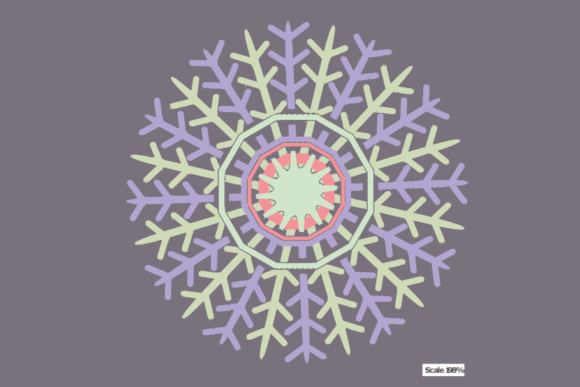
When Slim Curve Iceflakes appeared on my screen—clean vector preview, crisp edges, subtle tapering lines—I didn’t see “winter cliché.” I saw rhythm. The curves flow like breath on cold glass: slender, intentional, quietly confident. There’s no heavy outlining, no forced symmetry—just three or four gently arcing arms, each narrowing toward the tip, some with micro-terminations that suggest motion rather than stillness. It’s not a snowflake you’d find under a microscope; it’s one you’d notice catching light on a wool sleeve or tracing the collar of a baby onesie. That distinction matters. Slim Curve Iceflakes leans into elegance over ornamentation—ideal for makers who want winter-themed embroidery that feels curated, not seasonal filler.
Real Project Test: A Linen Tea Towel for a Local Bakery
Last week, I stitched Slim Curve Iceflakes onto a heavyweight natural linen tea towel—part of a small-batch holiday collection for a neighborhood bakery. No applique design here; just pure machine embroidery design using matte cotton thread and medium-weight cutaway stabilizer. The result? Crisp, legible, and surprisingly warm—not icy in tone, but calm and grounded. Customers responded to how “light” it felt despite being densely stitched: the slim curves avoided visual weight, letting the texture of the linen breathe around them. One buyer even asked if it was hand-drawn. That’s the sweet spot: Slim Curve Iceflakes doesn’t shout “embroidery”—it invites closer looking. For Etsy sellers and boutique owners, that quiet confidence translates directly to perceived value and repeat trust.
Where It Shines (and Where It Asks for Care)
Slim Curve Iceflakes performs beautifully on stable, medium-to-heavy fabrics: sweatshirt fleece, twill aprons, canvas tote bags, and structured pillow covers. Its low stitch density (no dense fill stitch blocks or overlapping satin stitch zones) makes it forgiving on home machines—and kind to your needle. On baby embroidery projects—think organic cotton knit onesies or gauzy swaddle blankets—I recommend pairing it with a lightweight tear-away stabilizer and testing thread tension first. The fine curves hold up well, but avoid placing it directly over seams or high-stretch areas without added support.
It’s less ideal for ultra-small hoop sizes (3 inches) unless scaled down thoughtfully—the delicate tips can blur or break on tight curves. Likewise, dark fabric demands careful thread color selection: a charcoal grey thread on black denim may vanish, while ecru on navy reads with soft contrast. For caps and curved surfaces, position it on the front panel where the crown’s slight dome supports the curve’s natural flow—avoid the bill’s edge or deep curvature where distortion creeps in.
What This Design Says About Your Brand
Using Slim Curve Iceflakes signals intentionality. It’s not a generic “snowflake pack” addition—it’s a considered design asset. When customers see it on a personalized gift or small shop product, they register craftsmanship before they register theme. That builds handmade credibility. For craft business owners listing on Etsy or selling at local fairs, this subtlety helps your work stand out amid busier, bolder competitors. It also scales gracefully across formats: as a single motif on a kitchen towel, repeated as a border on a holiday pillow cover, or subtly nested into a larger embroidered patch layout.
Practical Notes Every Embroiderer Should Check
- Always test on scrap fabric first—especially with textured weaves or blends. Linen, terry cloth, and brushed cotton behave differently under needle stress.
- Review stitch density visually before sending to your machine. Slim Curve Iceflakes avoids overcrowding, but verify no tiny gaps or floating stitches appear in the preview.
- Confirm hoop size compatibility. While adaptable, very tight placements (e.g., cuff hems or baby hat brims) may require manual repositioning or minor scaling.
- Inspect small details at 200% zoom: those tapered ends should remain clean—not jagged or pixelated—in your embroidery file.
- Test in black-and-white mockups to assess contrast and clarity across backgrounds. What reads softly on cream may disappear on oatmeal.
- Use proper stabilizer—cutaway for knits, tear-away for wovens, and a light film for sheer layers. Skipping this step risks puckering that breaks the curve’s fluidity.
- Verify licensing terms before selling finished products or bundling Slim Curve Iceflakes into digital embroidery collections. Commercial embroidery rights aren’t automatic—even for Winter-themed designs.
Beyond the Stitch: Why This Design Fits Real Life
Slim Curve Iceflakes works because it respects context. It doesn’t dominate a custom apparel piece—it complements it. On a charcoal crewneck sweatshirt? It adds quiet sophistication. On a pale blue baby blanket? It whispers seasonal warmth without overwhelming innocence. As a standalone embroidered patch? It holds its own beside bolder motifs without competing. And for digital product sellers building design assets, its clean lines translate flawlessly into printable mockups—no anti-aliasing issues, no gradient bleed.
Most importantly, it invites repetition without fatigue. You can use Slim Curve Iceflakes across holiday embroidery, nursery decor, wedding gifts (think ivory linen napkins), and even spring-into-winter transition pieces—because its language is shape and movement, not calendar dates. That flexibility is gold for creative entrepreneurs juggling multiple product lines and seasonal shifts.
If you’re evaluating Slim Curve Iceflakes for your next embroidery project—whether it’s a single personalized gift or your next best-selling Etsy listing—trust your eye, but test your assumptions. Let the curves guide you, not the season. Because great embroidery design isn’t about fitting in. It’s about belonging—cleanly, calmly, and completely.