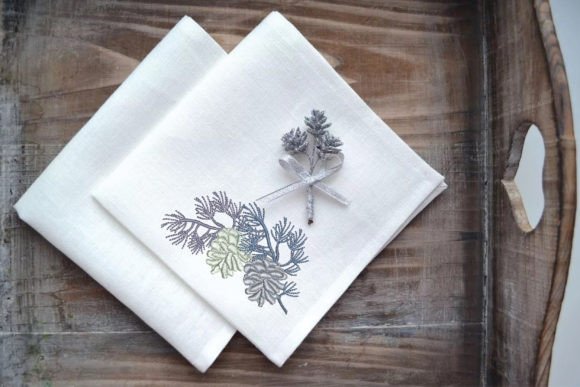
Pine Branch with Two Cones
A Festive, Farmhouse-Ready Embroidery Design That Sells at Craft Fairs
As an embroidery designer who’s filled over 80 craft fair booths—and watched which designs fly off tote bags while others sit untouched—I approached Pine Branch with Two Cones with both curiosity and realism. The title alone evokes warmth, quiet winter charm, and subtle seasonal elegance—not loud tinsel or cartoonish cheer, but the kind of Christmas that feels grounded, handmade, and quietly confident. It reads as rustic-farmhouse meets modern minimalism: a single pine branch, two natural-looking cones, no clutter, no script, no snowflakes crowding the frame. That restraint is its biggest strength.
Where Pine Branch with Two Cones Shines on Real Craft Fair Products
This design doesn’t need to shout to be noticed—it invites pause. At a crowded market, where bold fonts and glittery motifs compete for attention, Pine Branch with Two Cones stands out by being calm, cohesive, and deeply tactile. Here’s how it performs across top-selling categories:
- Tote bags: Perfect as a centered chest pocket accent (3–4” wide) or scaled up to 6” on the front panel—clean lines hold up beautifully on canvas and denim without distortion.
- Aprons: Ideal above the pocket or subtly along the waistband. Its organic shape complements apron drape and reads as intentional, not afterthought.
- Tea towel embroidery: Works exceptionally well in the lower corner or centered mid-panel. On textured linen or cotton towels, the branch’s gentle curves echo fabric grain—enhancing, not fighting, texture.
- Embroidered patches: A standout when heat-applied to denim jackets, canvas pouches, or market bags. At 2.5–3”, the cones retain dimension and the branch stays legible—even after washing.
- Pillow covers & small pouches: Scales down gracefully. Unlike dense floral motifs, this design avoids stitch buildup in tight corners, making it reliable for small-format commercial embroidery.
- Printable mockups & Etsy listings: Photographs cleanly on neutral backdrops. No glare, no confusing negative space—just clear shape, soft contrast, and instant seasonal recognition. Buyers scrolling fast still “get it” in under two seconds.
Production Practicality: Why This Design Saves Time and Builds Trust
The product description says it plainly: “The design is not complicated.” That matters more than you think. For small shop owners stitching pre-orders between school drop-offs and booth prep, low stitch density means faster hooping, fewer thread breaks, and consistent results across fabric types. There’s no fine lettering to misalign, no micro-details that vanish on dark fabric, and no overlapping layers that demand precise color sequencing.
That simplicity also supports brand consistency. Whether you’re selling embroidered tea towels under “Hearth & Hem” or minimalist caps under “Pine & Thread,” Pine Branch with Two Cones adapts without diluting your voice. It reads as premium because it’s uncluttered—not because it’s expensive to run.
Careful-Use Notes Every Embroiderer Should Check
Even graceful designs have limits. Before cutting fabric or loading your machine embroidery design, test these points:
- Dense stitch areas: While overall density is light, the cone bases may cluster slightly—confirm spacing on scrap fabric, especially with heavy stabilizer or thick twill.
- Small-scale clarity: Below 2”, the stem taper and cone texture soften. Avoid using Pine Branch with Two Cones as a tiny corner motif on baby bibs unless you’ve verified legibility on your target fabric.
- Curved surfaces: On baseball caps, place the design flat across the front panel—not wrapping over the crown curve—unless your hoop size and digitizing support gentle contouring.
- Dark fabric contrast: The design relies on clean edge definition. Use high-contrast thread (e.g., kelly green on charcoal, cream on navy) and avoid blending threads that mute the branch silhouette.
- Fabric texture: Highly napped fabrics (like fleece or bouclé) may obscure subtle needle detail. Stick to smooth cotton, linen, canvas, or medium-weight denim for best fidelity.
Design Integrity Meets Booth Impact
At craft fairs, customers don’t just buy embroidery—they buy confidence in your craft. Pine Branch with Two Cones signals intentionality: every stitch serves the shape, every cone has weight, every branch line flows. That perceived quality lifts the entire product. A $28 embroidered tea towel feels like a gift when paired with this design—not a generic holiday item, but a curated piece.
In your booth display, group it intentionally: one linen pillow cover, one striped apron, one natural canvas tote—all featuring the same design in the same placement and scale. Repetition builds visual rhythm and makes your brand instantly recognizable from ten feet away. And unlike trend-driven motifs, Pine Branch with Two Cones won’t feel dated next November—it’s timeless enough for year-round botanical gifting, yet unmistakably Christmas-ready.
Final Designer Checklist Before You Produce
Before turning Pine Branch with Two Cones into finished product—or listing it as a digital embroidery file—run through this quick list:
- Test the design on scrap fabric matching your production material (weight, weave, stretch).
- Verify thread colors against your fabric swatches—not your screen.
- Confirm hoop size compatibility with your most-used embroidery machine.
- Inspect stitch density visually: does the branch look airy or muddy? Adjust underlay if needed.
- Use tear-away + cut-away stabilizer combo for structured items (totes, caps); lightweight tear-away for tea towels and napkins.
- Create at least one real mockup—not just a digital preview—to assess drape, scale, and customer appeal in person.
- Compare how the design reads on light vs. dark fabric; adjust thread selection accordingly.
- Confirm commercial licensing terms before selling finished products—especially if distributing digitally or wholesaling.
Bottom line? Pine Branch with Two Cones is the kind of embroidery file that earns repeat buyers, fills photo grids with cohesive charm, and turns casual browsers into booth regulars. It’s not flashy—but at craft fairs, authenticity, clarity, and quiet craftsmanship are what truly sell.