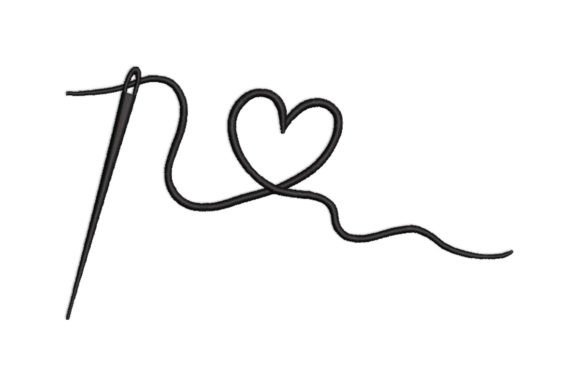
Heart with a Needle Thread
A Practical Review for Small Business Merchandise & Branded Patches
As an embroidery designer who’s developed hundreds of commercial machine embroidery designs for cafes, boutiques, florists, pet brands, and handmade studios, I approach every new design like a production partner—not just a decorator. When I first saw Heart with a Needle Thread, my instinct wasn’t “how pretty,” but “how usable?” Does it hold up as a chest logo on staff aprons? Will it translate cleanly as a 2-inch embroidered patch on tote bags? Can it reinforce brand identity without sacrificing clarity or durability? Let’s break it down.
First Impression: Friendly, Handmade, and Professionally Approachable
The title alone—Heart with a Needle Thread—immediately signals warmth, craft, and intention. It doesn’t feel overly decorative or fussy; instead, it reads as sincere, slightly nostalgic, and quietly confident. For small businesses rooted in care—like a neighborhood bakery, a floral studio, or a maker-focused Etsy shop—this design lands as both authentic and polished. It avoids cliché while still communicating love for process, detail, and handmade product. Visually, it suggests a balance: soft enough for a boutique aesthetic, structured enough for consistent branding across uniforms and packaging accents.
Real-World Performance Across Business Touchpoints
Embroidered patches: This is where Heart with a Needle Thread shines. Its clean silhouette, balanced negative space, and central focal point make it highly legible at 1.5–2.5 inches—ideal for iron-on or sewn-on patches on tote bags, jackets, or product tags. As a branded patch, it subtly reinforces your values (craft, care, attention) without demanding attention.
Staff uniforms and aprons: Placed on the left chest or upper sleeve of cotton or twill aprons, Heart with a Needle Thread reads as thoughtful—not corporate, not childish. It works especially well when paired with minimal text (e.g., a shop name in clean sans-serif beneath). On dark fabrics, use high-contrast thread colors (ivory on navy, charcoal on cream) to preserve definition.
Cap embroidery and tote bag design: The design’s moderate stitch density means it won’t pucker or overwhelm curved surfaces like cap fronts or woven tote handles—provided you confirm hoop size compatibility before digitizing. It scales down more gracefully than intricate monograms or script logos, making it reliable for small-batch commercial embroidery runs.
Product packaging and customer gifts: Stitched onto fabric gift tags, linen pouches, or reusable produce bags, Heart with a Needle Thread adds tactile value. Customers notice—and remember—the intention behind a stitched heart over a printed one. It elevates perceived quality, especially for handmade product lines.
Where to Use Heart with a Needle Thread Thoughtfully
This design isn’t built for extreme miniaturization. Avoid using it below 1.25 inches unless you’ve tested it thoroughly—fine needle details may collapse or lose definition on tiny cap fronts or pocket-sized patches. Likewise, tightly textured fabrics (like heavy burlap or looped terry) can obscure subtle outlines, so always pair with appropriate stabilizer and test on real substrate.
High-stitch-density areas (if present in the file) may require extra backing on lightweight or stretchy fabrics—common in modern work shirts or eco-tote materials. And if your brand uses dark uniforms or frequent-wash items (think café aprons), verify that the thread colors included in the embroidery file provide enough contrast for long-term legibility after laundering.
How It Strengthens Brand Identity & Customer Trust
In a sea of generic logos, Heart with a Needle Thread offers quiet differentiation. It signals craftsmanship—not just aesthetics. When customers see it on your staff’s apron or your signature tote, they subconsciously associate your brand with care, patience, and human-made value. That builds trust faster than any slogan.
For Etsy sellers and creative studios, it supports visual consistency across digital and physical touchpoints: use it in printable mockups, pair it with your font palette in social bios, and repeat it across packaging and apparel. It becomes a recognizable motif—not just decoration—but part of your brand language.
Essential Designer Notes Before Production
- Always test in black and white first. This reveals spacing issues, overlapping elements, and stitch logic flaws invisible in color previews.
- Check minimum viable size. Resize the embroidery file to your smallest intended use (e.g., 1.5" wide) and inspect for lost detail—especially around the needle tip and thread curve.
- Review thread color contrast against your actual fabric swatches—not screen previews. Light threads on light fabrics often fade in stitching.
- Confirm hoop size and format compatibility with your embroidery machine and software. Not all machines handle dense fills or fine satin stitches the same way.
- Test on real fabric with proper stabilizer. A $5 stabilizer test saves hours of rehooping and rethreading later.
- Create a printable mockup for client approval before digitizing or stitching. Visual alignment matters—especially for chest placement or cap front centering.
- Compare alongside your other design assets. Does Heart with a Needle Thread harmonize with your typography, icon set, and existing embroidery files?
- Verify commercial licensing. Since this is a machine embroidery design intended for small business merch, ensure the license explicitly permits resale, branded patch use, and custom apparel production.
Bottom line: Heart with a Needle Thread isn’t just another sewing-themed graphic—it’s a versatile, brand-conscious tool for small business owners who understand that every stitched detail contributes to perception, loyalty, and long-term value. Whether you’re launching your first line of aprons or refreshing your Etsy shop’s packaging system, this embroidery file earns its place in your design assets—not as filler, but as functional storytelling.