Chinese New Year Dragon
A Craft Fair Designer’s First Look: Bold, Festive, and Instantly Recognizable
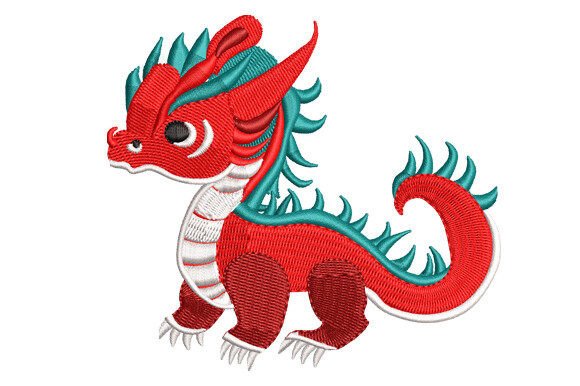
As an embroidery designer who’s prepped over 200 craft fair booths—from Portland makers’ markets to NYC holiday bazaars—I opened the Chinese New Year Dragon design with one question in mind: Will this stop a shopper mid-aisle? The answer is yes—immediately. This isn’t a subtle motif or a minimalist silhouette. It’s bold, festive, and culturally resonant, with strong curves, expressive scale, and a joyful energy that reads clearly even from six feet away. Forget “cute” or “rustic”—this leans into premium celebration: elegant enough for a boutique pillow cover, spirited enough for a kids’ tote, and rich enough to command higher price points at handmade markets.
Where Chinese New Year Dragon Shines on Real Craft Fair Products
This design thrives where personality meets practicality. On a tote bag design, it anchors the front panel without overwhelming—especially when placed slightly off-center above the seam. As apron embroidery, it pops beautifully on the bib or pocket, adding instant cultural flair to kitchen and bakery-themed booths. For tea towel embroidery, it works best on medium-weight cotton (not terry or waffle weave), where stitch definition stays crisp against fabric texture. As an embroidered patch, it holds up brilliantly—clean outlines, balanced negative space, and no micro-details that vanish after laundering.
It also translates well to caps (front panel only—avoid crown curves unless you’ve tested stitch behavior), small pouches (ideal for 4x4 hoop placements), and pillow covers (centered or corner-accented). Skip dense-textured fabrics like heavy linen blends or thick canvas unless you reinforce with cutaway stabilizer—this isn’t a “throw-it-on-and-go” design for every substrate.
What Makes It Sell—And What Requires Caution
Selling strengths: High visual contrast, clear cultural storytelling, and immediate emotional resonance. Customers scanning a booth of neutral farmhouse aprons or monochrome tea towels will pause at the red-and-gold energy of Chinese New Year Dragon. It photographs exceptionally well for Etsy seller listings—especially flat-lay shots with real fabric backgrounds—and scales cleanly across printable mockups for digital storefronts.
Careful-use notes: Avoid shrinking it below 3 inches wide—the dragon’s head details and flame accents soften quickly. Don’t attempt it on dark fabric without verifying thread contrast in your actual embroidery file; some gold or metallic threads lose luminosity on navy or charcoal. Also, steer clear of highly curved surfaces (like cap crowns or deep-dome bags) unless you’ve run a test on scrap fabric first. Dense stitch areas may require stabilizer upgrades—especially for commercial embroidery runs on lightweight poplin or rayon.
Production Reality Check: Speed, Clarity, and Batch Consistency
This is a machine embroidery design built for efficiency—not just aesthetics. The layout avoids overlapping stitches, minimizes jump threads, and groups color changes logically. That means faster hooping, fewer thread breaks, and smoother batch production for your small shop product line. It reads clearly at a glance: no confusing layering, no ambiguous silhouettes. That clarity directly boosts buyer engagement—shoppers understand what they’re getting before they even ask.
But don’t assume “quick and effortless” means skip-the-test. I’ve seen too many craft fair sellers discover mid-booth that a supposedly “exquisite” digital embroidery file frays on textured towels or gaps on thin cotton. Always run a full-size test on your exact fabric—check spacing between dragon scales, confirm flame tips don’t feather, and verify that no tiny interior elements disappear under thread tension.
Design Notes Every Embroidery Business Owner Should Follow
- Test on scrap fabric first—especially if using non-standard materials like bamboo blends or performance knits.
- Check thread contrast on your target fabric colors before stitching 50 units. Gold thread on black? Gorgeous—if your machine handles it. Faded on gray? Not so much.
- Review spacing and density. Tight curves need looser fill; dense areas demand stronger cutaway stabilizer.
- Confirm hoop size compatibility. If your standard setup is 4x4, ensure the design fits—or budget time for re-hooping on larger frames.
- Create at least one real mockup—not just a digital preview. Drape it on your tote, pin it to your apron sample, hold it next to your other craft fair product offerings. Does it harmonize? Stand out? Elevate your brand consistency?
- Compare fabric colors side-by-side. A design that sings on ivory linen may mute on oatmeal canvas.
- Verify commercial licensing before selling finished products. This is non-negotiable for Etsy sellers and wholesale partners.
Final Verdict: A Strategic Addition to Your Handmade Product Line
The Chinese New Year Dragon isn’t just another seasonal pattern—it’s a high-conversion handmade product asset. It strengthens booth display strength by adding color, culture, and confidence to your table. It raises perceived value without requiring premium materials—just smart execution. And because it bridges tradition and trend, it appeals to multiple audiences: gift buyers, collectors of meaningful decor, food entrepreneurs branding their kitchen line, and families celebrating heritage.
Yes, it’s categorized under Dinosaurs—but let’s be clear: this is not a T. rex reinterpretation. It’s a culturally grounded, commercially savvy Embroidery design rooted in symbolism, movement, and celebration. Use it intentionally. Test it thoroughly. Pair it with strong product choices—and watch it become one of your most asked-about design assets at the next market.